OPPD Arboretum Omaha – Explore Nature, Learn Tree Safety & Walk Beautiful Trails
Wander through native prairies, gardens, and shaded paths at the OPPD Arboretum. A peaceful, educational, and free nature space in northwest Omaha.
Jul 15, 202532.1K Shares473K Views
Location & Purpose
The OPPD Arboretum is located at 108th and Blondo Streets in northwest Omaha. This 26-acre site sits next to an Omaha Public Power District (OPPD) substation. It was created to help the public learn how to plant and care for trees safely, especially near power lines. The goal is to prevent power outages and protect the safety of utility crews and the community. This arboretum is unique because it combines environmental education with electrical safety awareness.
History & Development
The idea for the arboretum began in the late 1980s when OPPD staff noticed that many tree-related power outages were caused by trees planted too close to power lines. To solve this, they designed an educational space to show proper planting techniques. Planning started in 1989, and the site slowly developed over several years. Paths, garden areas, walls, and signage were built in phases. The arboretum officially opened to the public in 2004 and has been used for education ever since.
Plant Collections & Layout
Today, the arboretum contains more than 1,000 trees and shrubs, representing over 200 different species. The landscape includes several themed planting areas such as a formal garden, a native prairie, and erosion-control displays. Visitors can also find a pollinator garden, an edible orchard, and windbreak and shelterbelt areas. Each section helps teach how different plants can support wildlife, reduce energy costs, or improve yard design. The arboretum also highlights how to safely plant trees near utility poles and lines.
Outdoor Classroom & Education
The entire site is designed to serve as an outdoor classroom. There are many educational signs placed throughout the walking trails. These signs teach visitors about tree selection, spacing, and maintenance. There are also specific areas that explain how trees affect electric reliability. The arboretum is frequently used by schools, scout groups, utility workers, and homeowners who want to learn about planting trees the right way. It is also a great space for casual learning and quiet exploration.
Special Trees & Unique Features
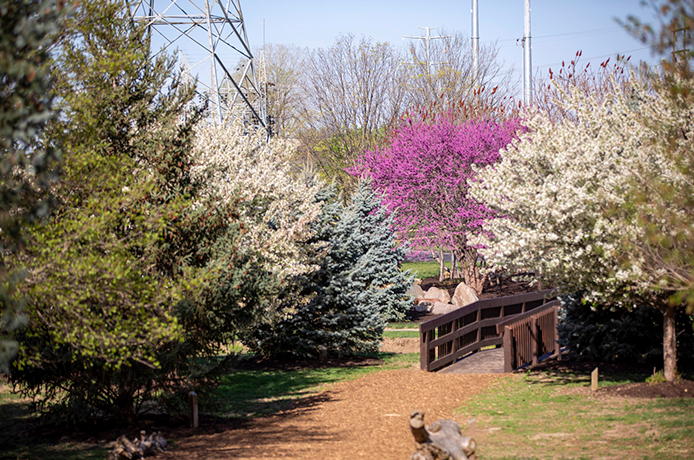
The arboretum includes several trees that have historical or symbolic meaning. One tree, a Green Ash, was grown from a seed found near the childhood home of George Washington Carver. Another special tree, a sycamore, came from Elvis Presley’s Graceland estate. These trees are marked with signs that explain their history. Other features include a pond, a gazebo, wooden bridges, and benches—making the arboretum a peaceful and photo-friendly place to visit.
Trails & Wildlife
Visitors can walk on about two miles of trails, which include both paved paths and soft wood-chip trails. These paths guide people through sunny fields, forested areas, and well-kept gardens. Wildlife is common throughout the arboretum. Birds, rabbits, squirrels, butterflies, bees, and sometimes deer can be seen during quiet times. Visitors are encouraged to take their time and notice the different shapes, textures, and colors of the trees, especially during the spring and fall.
Accessibility & Visitor Info
The OPPD Arboretum is open every day from dawn to dusk. Entry is completely free, and no reservations are needed. There is a small parking lot on the south side of the site, off Blondo Street. Most trails are accessible for people using wheelchairs or strollers. Visitors can bring dogs as long as they are on a leash. While there are no restrooms or large facilities, there are benches, shaded areas, and a gazebo for comfort during walks or short visits.
Community Value & Recognition
The OPPD Arboretum is one of the first utility-sponsored arboretums of its kind in the United States. It serves as a trusted demonstration site for proper tree planting, energy-saving landscaping, and electrical safety education. It’s regularly visited by educators, gardeners, nature photographers, and Omaha families. As a free, well-maintained outdoor space, it adds value not just to OPPD’s service goals, but also to Omaha’s park and environmental education efforts.
Jump to
Latest Articles
Popular Articles