Historic Winter Quarters & Mormon Trail Center – Omaha’s Free Heritage Site
Visit the Mormon Trail Center in Omaha to explore pioneer life through exhibits, outdoor monuments, and free guided tours. A family-friendly historical site.
Jul 15, 202576.6K Shares1M Views
Location & Mission
The Mormon Trail Center is located at 3215 State Street in the Florence neighborhood of Omaha, Nebraska. It stands on the site of Winter Quarters, a settlement built by members of The Church of Jesus Christ of Latter-day Saints during their westward migration in the 1840s. The center is operated by the Church and offers free admission to all visitors. Its mission is to preserve and share the history of the Mormon pioneers who camped and lived in this area before continuing their journey to Utah. The site serves as both a museum and a historical landmark.
History & Development
Before the current building was constructed, the site had a small visitor center located in a house. In 1995, that was replaced temporarily by trailers while the new facility was being planned and built. The current building was completed in late 1996 and officially opened in April 1997. Church President Gordon B. Hinckley dedicated the building during a formal ceremony. Since then, the center has become a key location for those interested in Mormon history and the pioneer era.
Museum Building & Exhibits
The center includes an 11,000-square-foot brick museum with two floors and three small theaters. Inside the museum, there are life-size exhibits that show what pioneer life was like in the 1840s. Visitors can see a full-scale covered wagon with oxen, a handcart, a log cabin, and pioneer tools. There are also interactive displays that use light and sound to explain how the pioneers lived, traveled, and survived during their journey. The museum provides both historical facts and visual representations that are easy to understand.
Key Exhibit – "Zion In The Wilderness"
The main exhibit is called Zion in the Wilderness. It is divided into three parts. The first section covers the journey from Nauvoo, Illinois, across Iowa. The second section focuses on life at Winter Quarters along the Missouri River, showing how the pioneers built homes and managed through a harsh winter. The third section tells the story of the final part of the journey from Winter Quarters to the Salt Lake Valley in Utah. This exhibit gives visitors a full understanding of the pioneer migration.
Outdoor Landmarks
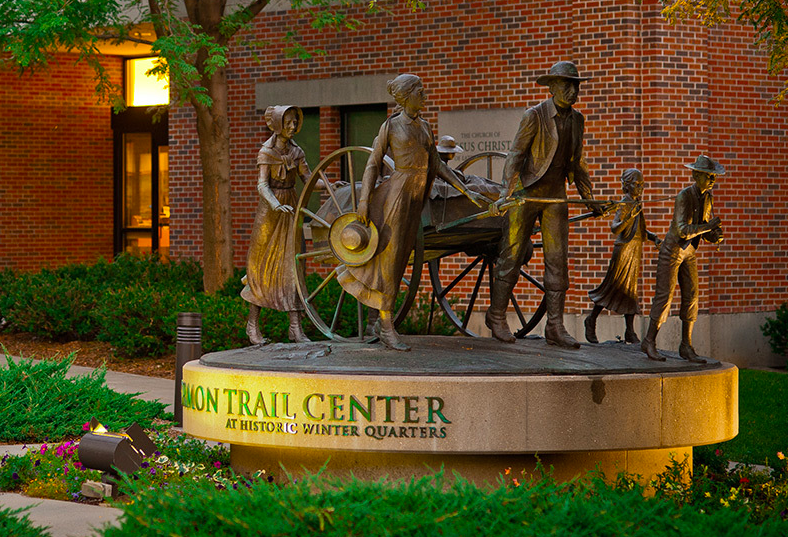
Directly across from the museum is the Mormon Pioneer Cemetery. About 359 people who died during the winter of 1846–1847 are buried there. A bronze statue titled Tragedy of Winter Quarters, created by sculptor Avard Fairbanks, stands in the cemetery. The statue shows a pioneer couple grieving over a child’s grave and honors the hardships faced by these early settlers. Nearby is the Winter Quarters Nebraska Temple, which opened in 2001, and a life-size sculpture of a pioneer family with a handcart, added in 1998. These outdoor landmarks give visitors a deeper sense of the personal sacrifices made during that time.
Historic Winter Quarters Community
Winter Quarters was built in 1846 after the Mormon pioneers were forced to leave Nauvoo, Illinois. Around 2,500 to 3,800 people stayed in Winter Quarters during the winter of 1846–1847. They built log cabins, dugouts, and other shelters. The community also had schools, workshops, and a flour mill known today as the Florence Mill. Many people died from illness and harsh weather, but the settlement served as a crucial stop before continuing west. In spring 1847, most of the pioneers resumed their journey to what would become Utah.
Visiting & Services
The Mormon Trail Center is open to the public year-round. It is closed on Thanksgiving Day, Christmas Day, and New Year’s Day. Regular hours are from 10:00 a.m. to 7:00 p.m. Monday through Saturday, and noon to 7:00 p.m. on Sundays. Admission is free for everyone. The museum offers both guided tours and self-guided options, and visitors can also watch short films in its on-site theaters. The center is fully accessible for people with disabilities and has restrooms and seating areas, making it suitable for families, school groups, and tourists.
Events & Programs
Throughout the year, the center hosts several public programs and seasonal events. These include genealogy workshops, quilt displays in the fall, and a gingerbread house exhibit during the Christmas season. The center also takes part in Florence Days, a neighborhood celebration with historic tours and activities. Visitors can take walking tours of the cemetery and view markers that tell more about pioneer families and individuals. These events help connect modern visitors with the past in an engaging and respectful way.
Jump to
Latest Articles
Popular Articles